

Executive Summary:
CBAM does not tax data centers directly, but it will increasingly affect the cost of steel, cement, aluminum, and electricity used in their construction and operation. As EU carbon pricing expands, operators must integrate embodied carbon into procurement, site selection, and financing decisions. This article explains how CBAM works and how data center developers can respond strategically.
In practice, that means you will increasingly pay a carbon price on the embodied emissions in the steel, cement, aluminium, electricity, and other CBAM‑covered inputs behind your facilities and hardware—not just on your direct power use. For operators and cloud buyers, the practical playbook is to measure full‑lifecycle emissions at the asset and supplier levels, switch to lower‑carbon materials and power, and use verified carbon credits only for hard‑to‑abate residuals—ideally through a platform like Zero Circle that links granular data, decarbonization plans, and sustainable finance.
What Is CBAM and Why It Matters to Data Centers
Data centers account for roughly 1.5–2% of global electricity use today, and IEA projections suggest total demand could more than double by 2030 as AI and cloud workloads grow. That means any new carbon price applied to the materials and electricity behind those facilities shows up quickly in your capex, opex, and financing conversations.
The EU Carbon Border Adjustment Mechanism (CBAM) is a carbon pricing system applied to certain imports, so their embedded emissions face a carbon cost similar to those of production within the EU Emissions Trading System. Legally, it is set out in the CBAM Regulation and related implementing rules, which tie the CBAM certificate price to the average EU ETS allowance price, minus any explicit carbon price already paid in the country of origin.
CBAM Regulatory Snapshot (for quick reference)
- Sectors in scope from January 2026: cement, iron and steel, aluminium, fertilisers, hydrogen, and electricity.
- Legal basis: CBAM Regulation plus implementing acts that define calculation methods, default values, verification, and the link to the EU ETS carbon price.
- Transitional phase: 1 October 2023 – 31 December 2025, with quarterly reporting of embedded emissions in the CBAM Transitional Registry but no certificate purchases.
- Definitive phase: from 1 January 2026, importers must submit annual CBAM declarations, have embedded emissions verified, and surrender CBAM certificates for covered imports.
- De‑minimis rule: for certain goods in the steel, aluminium, fertiliser, and cement sectors, EU importers whose total annual imports do not exceed 50 tonnes can be exempt from CBAM obligations.
Most data centers do not ship “data” under CBAM, but they depend heavily on CBAM‑covered materials and grid electricity, especially when building or expanding in Europe or serving EU‑linked demand. Because data centers are already a material share of global electricity use and are set to grow sharply, regulators, customers, and investors will closely track how CBAM‑driven costs influence your design and sourcing choices.
How Does CBAM Work in Simple Terms?
CBAM requires EU importers of covered goods to report product‑level embedded emissions during the transitional phase and, from the definitive phase onward, to buy and surrender CBAM certificates corresponding to those emissions. Reported emissions must generally be verified by accredited verifiers and included in an annual CBAM declaration, which determines the number of certificates to surrender.
Emissions can be calculated using actual data from manufacturers, approved equivalent methods, or default values published by the European Commission, but the default values are intentionally conservative to encourage the collection of real, verified data. CBAM applies at the level of the CN code of the imported good, and not all products in a sector are covered—for example, some aluminium car parts may be excluded, while simple aluminium fasteners or semi‑finished products under specific CN codes are included.
Over time, the EU has signalled its intention to expand CBAM to selected “downstream” steel‑ and aluminium‑intensive products (around 180 product lines) from 1 January 2028, subject to legislative approval. That potential expansion would bring more complex manufactured components closer to certain data center structural elements and hardware‑adjacent parts, thereby bringing them into direct CBAM scope.
Where Are Data Centers Exposed to CBAM?
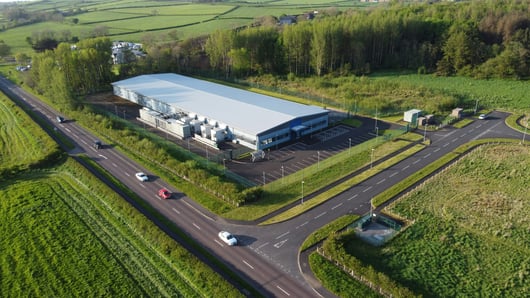 Even if your business model is “digital services”, your CBAM exposure comes from physical and energy inputs.
- Construction materials: Cement and steel used in buildings, foundations, racks, and structural components are directly in CBAM scope when imported into the EU, under the cement and iron/steel CN codes listed in the Regulation.
- Metals and components: Aluminium components in structures, some hardware housings, and certain fasteners fall under specific aluminium CN codes covered by CBAM.
- Electricity: CBAM applies to cross-border imports, while domestic power prices reflect EU ETS pass-through. Most data centers are affected through EU ETS pricing, not direct CBAM electricity imports.
- Upstream manufacturing: Non‑EU manufacturers of CBAM goods supplying your EU projects need to provide verified embedded‑emissions data, which you will increasingly have to request and integrate into procurement.
This exposure translates into higher capex and opex for carbon‑intensive choices and better economics for low‑carbon alternatives (for example, low‑clinker cement, recycled steel, renewable‑heavy power contracts), especially for hyperscale builds and colocation campuses.
What Does Carbon Pricing Mean for Data Centers?
Carbon pricing is any policy that puts a monetary cost on greenhouse‑gas emissions, usually through either a carbon tax or an emissions trading system (ETS). A carbon tax sets a fixed price per tonne of CO₂ emitted, while an ETS (cap‑and‑trade) sets a cap on total emissions and lets companies trade allowances, with the market determining the carbon price.
The EU ETS is the EU’s main carbon pricing system, and CBAM extends that price signal to certain imported goods by requiring importers to buy CBAM certificates whose price mirrors the EU ETS allowance price. In practice, this means the embodied emissions in your cement, steel, aluminium, fertilisers, hydrogen, and electricity imports into the EU all carry an explicit carbon cost, on top of any national carbon taxes you might face in other jurisdictions.
For data center operators, carbon pricing affects cost structures through three primary channels:
- Higher material and electricity costs where suppliers face ETS or carbon tax obligations.
- Direct CBAM certificate costs on CBAM‑covered imports into the EU.
- Indirect financing and reputational costs if your carbon‑intensive choices make it harder to access green loans or meet customer climate requirements.
CBAM‑Sensitive Levers in a Typical Data Center Project
| Lifecycle stage | CBAM‑sensitive inputs | Practical decisions you can change |
|---|---|---|
| Site selection and grid | Imported electricity into EU, carbon intensity of local grid, CBAM exposure on cross‑border power flows. | Choose regions with cleaner power, use PPAs or on‑site renewables, and factor CBAM‑linked costs into long‑term grid strategy. |
| Design and construction | Cement, iron and steel, aluminium products in structures and racks, under CBAM CN codes. | Specify low‑carbon concrete, high‑recycled steel, alternative materials, and suppliers with verified product‑level data to avoid conservative defaults. |
| Hardware and infrastructure | Metals and components in cabinets, frames, and support structures that may fall under CBAM‑covered downstream products in future phases. | Prefer vendors who disclose CBAM‑ready product footprints and whose manufacturing runs on low‑carbon power; monitor upcoming 2028 downstream‑scope changes. |
| Operations | Electricity consumption, cooling systems, and grid interactions, with EU data centers already facing efficiency and reporting obligations. | Improve energy efficiency (PUE), shift loads to low‑carbon hours, procure renewable electricity, and align with EU Energy Efficiency Directive reporting requirements. |
Can Carbon Credits Reduce My CBAM Costs?
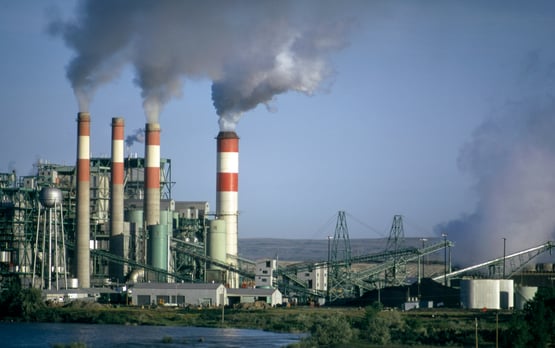 CBAM certificates are not voluntary carbon credits; they are compliance instruments anchored in EU law and priced off the EU ETS. Buying CBAM certificates does not “offset” your emissions—it simply aligns the carbon cost of imports with EU internal pricing and reduces carbon leakage.
Voluntary carbon credits may play a role in neutralizing residual emissions after reduction efforts are exhausted, but they do not reduce CBAM certificate obligations.
For data centers affected by CBAM, a simple hierarchy works best:
- Measure full Scope 1–3 emissions, including embodied carbon in steel, cement, and hardware, and electricity‑related emissions tied to CBAM‑covered power flows.
- Reduce and substitute by selecting lower‑carbon CBAM‑covered materials and cleaner power, optimizing design and operations, and renegotiating supplier specifications.
- Neutralize residuals with high‑quality, independently verified credits (for example, removals with strong additionality and permanence) where emissions are currently hard to abate or outside your direct control.
This hierarchy is also what regulators, large customers, and lenders increasingly expect to see in sustainability disclosures and green‑finance applications.
How Does CBAM Impact Data Center Construction and Operations?
Data centers are capital-intensive environments that rely heavily on materials covered under the initial CBAM scope. Understanding these impacts is critical for procurement and sustainability teams.
1. Embedded Carbon in Infrastructure
CBAM’s initial phase focuses on raw materials with high embedded emissions that are imported into the EU. Data centers use significant amounts of:
- Steel: For racks, structural frames, and containment systems.
- Aluminum: For cooling units, heat sinks, and cabling.
- Electricity: Directly imported power for cross-border facilities.
2. Supply Chain Cost Increases
As of 2026, importers must report the embedded emissions in these goods. If the production of these materials exceeds EU carbon standards, importers must purchase CBAM certificates to bridge the gap. This effectively raises the CAPEX for new builds.
3. Reporting and Compliance
Operators must now track the "embedded emissions" of their hardware. This requires closer collaboration with vendors (like Schneider Electric or Vertiv) to obtain accurate carbon data rather than relying on industry averages.
Comparing CBAM Certificates vs. Voluntary Carbon Credits
It is a common misconception that voluntary carbon credits can offset CBAM obligations. They serve entirely different regulatory functions.
| Feature | CBAM Certificates | Voluntary Carbon Credits (VCC) |
|---|---|---|
| Purpose | Regulatory import tax to prevent "carbon leakage." | Offsetting operational emissions (Scope 1-3). |
| Authority | European Commission (EU). | Independent registries (Verra, Gold Standard). |
| Tradability | Non-tradable; purchased from a central authority. | Tradable on open markets. |
| Data Center Use | Mandatory for importing covered goods into the EU. Because: • Not all hardware is in scope. • It depends on CN codes. |
Optional for meeting "Net Zero" marketing goals. |
How EU Energy and Data Center Rules Intersect With CBAM
Beyond CBAM, EU data centers face a tightening regulatory environment around energy and transparency.
- The recast EU Energy Efficiency Directive sets an EU‑wide target to reduce final energy consumption by at least 11.7% by 2030 compared to projected 2030 levels.
- Under this directive, data centers above 500 kW located in the EU must report on their energy performance and related indicators from May 2024.
- The EU is also advocating globally to double the annual rate of energy‑efficiency improvements from around 2% to over 4% by 2030 and to triple installed renewable capacity.
For operators, this means the same measurement, data‑collection, and efficiency improvements that CBAM pushes on the material‑import side are being reinforced by energy‑efficiency rules on the operations side.
How to Calculate CBAM Obligations for New Data Center Builds
To determine the financial impact on a project, data center developers can follow a three-step CBAM calculation framework:
- Identify CBAM goods: Filter your Bill of Materials (BOM) for HS/CN codes related to steel, aluminium, cement, and other covered goods that fall within the CBAM annexes. The output is a subset of line items that will attract CBAM obligations if imported into the EU.
- Quantify embedded emissions: Request the Actual Embedded Emissions data from your supplier for those CBAM goods. If unavailable, EU default values must be used. These are typically conservative and can materially increase certificate exposure.
- Apply the EU ETS price: Multiply embedded emissions (in tonnes of CO₂e) by the relevant CBAM certificate price, which is linked to the weekly average EU ETS allowance price. This gives a project-level estimate of CBAM-linked costs that can be incorporated into capex, opex, and financing models.
Understanding exposure is only the first step. The strategic advantage comes from integrating carbon pricing into procurement, design, and financing decisions — rather than treating it as a late-stage compliance cost.
How Zero Circle Supports Data Centers Under CBAM and EU Carbon Pricing
Zero Circle is partnered with Wasabi Technologies to support data centers in their decarbonization journey. Together, we're helping operators navigate the complexities of CBAM compliance, carbon pricing, and sustainable infrastructure design.
1. Regulatory Intelligence + Measurement
CBAM is not only a carbon price mechanism — it is a data regime. From 2026 onward, EU importers must submit verified embedded-emissions data for covered goods under specific CN codes and surrender CBAM certificates priced in line with the EU ETS.
For data center developers and operators, this means steel, cement, aluminium, and certain electricity imports must be traceable at the product and supplier level. Portfolio-level estimates or generic averages may trigger the use of conservative default values, increasing effective carbon exposure.
Zero Circle translates procurement and supplier data into CBAM-aligned embedded emissions calculations.
CBAM Scope Mapping
- Ingests Bills of Materials (BOMs)
- Flags CBAM-covered CN codes
- Identifies potential exposure to future downstream scope expansions
This ensures exposure is identified before procurement contracts are finalized.
Embedded Emissions Integration
- Integrates supplier-provided actual emissions data
- Detects reliance on EU default values
- Structures documentation for verification readiness
By prioritizing actual product-level data over defaults, developers can reduce certificate obligations while strengthening audit defensibility.
Compliance-Ready Outputs
- Generates CBAM declaration-ready datasets
- Aligns with EU Energy Efficiency Directive reporting
- Integrates with broader Scope 3 supply-chain frameworks
Zero Circle operates as a regulatory translation layer between procurement systems, supplier disclosures, and EU carbon pricing rules.
2. Scenario Modeling + Cost Forecasting
From 2026 onward, CBAM certificates will be priced according to the weekly average EU ETS allowance price. This introduces carbon price volatility directly into capital allocation and procurement decisions.
A material choice made today may carry significantly different lifetime cost implications depending on EU ETS price trajectories.
Zero Circle models carbon as a financial variable.
Carbon Cost Sensitivity Modeling
- Inputs embedded emissions per material or supplier
- Applies multiple EU ETS price scenarios
- Generates projected CBAM cost ranges over asset lifetimes
This allows project teams to evaluate exposure under conservative, base, and high carbon price pathways.
Supplier and Material Comparison
The platform enables side-by-side modeling of:
- High-recycled vs primary steel
- Low-clinker vs conventional cement
- Alternative aluminium production pathways
- Different electricity sourcing strategies
Each option is assessed not only on upfront cost, but on projected carbon-linked cost under evolving EU pricing.
Location and Grid Analysis
Site selection increasingly intersects with carbon pricing. The platform integrates:
- Regional grid carbon intensity
- Electricity import exposure
- Interaction with EU ETS pass-through pricing
- Access to renewable power and PPAs
By quantifying carbon pricing impacts before construction begins, developers can optimize design and location decisions in a structured way.
3. Finance + Credits Governance
Carbon-intensive infrastructure increasingly faces scrutiny from lenders, investors, and enterprise customers — particularly in EU-linked markets where CBAM and energy-efficiency regulations intersect.
Lower-embodied-carbon design choices reduce certificate exposure and may strengthen financing eligibility.
Zero Circle connects carbon intelligence with capital strategy.
Lender-Ready Decarbonization Planning
- Consolidates embodied and operational emissions
- Aligns with EU carbon pricing and efficiency requirements
- Provides scenario-tested reduction pathways
This supports eligibility for green loans, sustainability-linked debt structures, and climate-aligned infrastructure funds.
Sustainable Finance Integration
Projects can demonstrate:
- Reduced exposure to carbon pricing volatility
- Structured decarbonization roadmaps
- Alignment with EU regulatory direction
This strengthens engagement with green lenders and institutional capital providers.
Credits Governance Within a Reduction-First Strategy
CBAM certificates are mandatory compliance instruments and cannot be replaced with voluntary carbon credits. However, after reduction pathways are optimized, high-integrity carbon credits may be used to neutralize residual operational emissions that remain hard to abate.
Zero Circle embeds carbon credits within a governance framework that:
- Prioritizes reduction and substitution first
- Screens for independently verified, high-additionality projects
- Aligns credit use with disclosure best practices and emerging net-zero standards
This ensures credits complement — rather than substitute — disciplined decarbonization.
What Should Data Centers Do Next About CBAM?
CBAM, carbon pricing, and carbon credits are becoming core design variables for data center development — influencing where you build, what materials you specify, and how you structure financing.
Treat CBAM and EU energy rules as structural inputs into procurement and site strategy. Tighten measurement at the supplier level, compare low-carbon material alternatives under EU ETS scenarios, and integrate financing considerations early in project design.
Organizations that can quantify exposure, model future carbon costs, and align with capital markets' expectations will convert regulatory pressure into competitive advantage.
Zero Circle’s platform is structured to address this intersection of regulation, carbon pricing, and finance — connecting granular emissions data with regulatory requirements, capital providers, and credible carbon governance so data center assets are CBAM-ready and resilient to future carbon pricing expansion.
.png)